
Here's something the internet doesn't say enough: you are the expert on your own life. Not your GP, not your adult children, and certainly not a well-meaning leaflet from the council. So this post is written for you — the person who wants to keep living on their own terms and is quietly doing the research to make that happen.
The good news? The research is largely on your side. Living alone after 70 doesn't have to mean vulnerability or decline. For many people, it means continued purpose, routine, and genuine quality of life. What makes the difference isn't luck — it's a handful of practical habits and small adjustments that compound over time. Here's what the evidence actually says.
Your Body Is More Adaptable Than You Think — But It Needs the Right Signals
One of the most persistent myths about ageing is that physical decline is simply inevitable and linear. In reality, research consistently shows that how you move — and how often — has a dramatic effect on how well you age.
A long-running study published in the British Journal of Sports Medicine found that adults who remained physically active into their 70s and beyond had significantly better balance, muscle strength, and cognitive function than those who didn't — regardless of when they started exercising. That last part matters: it's not too late.
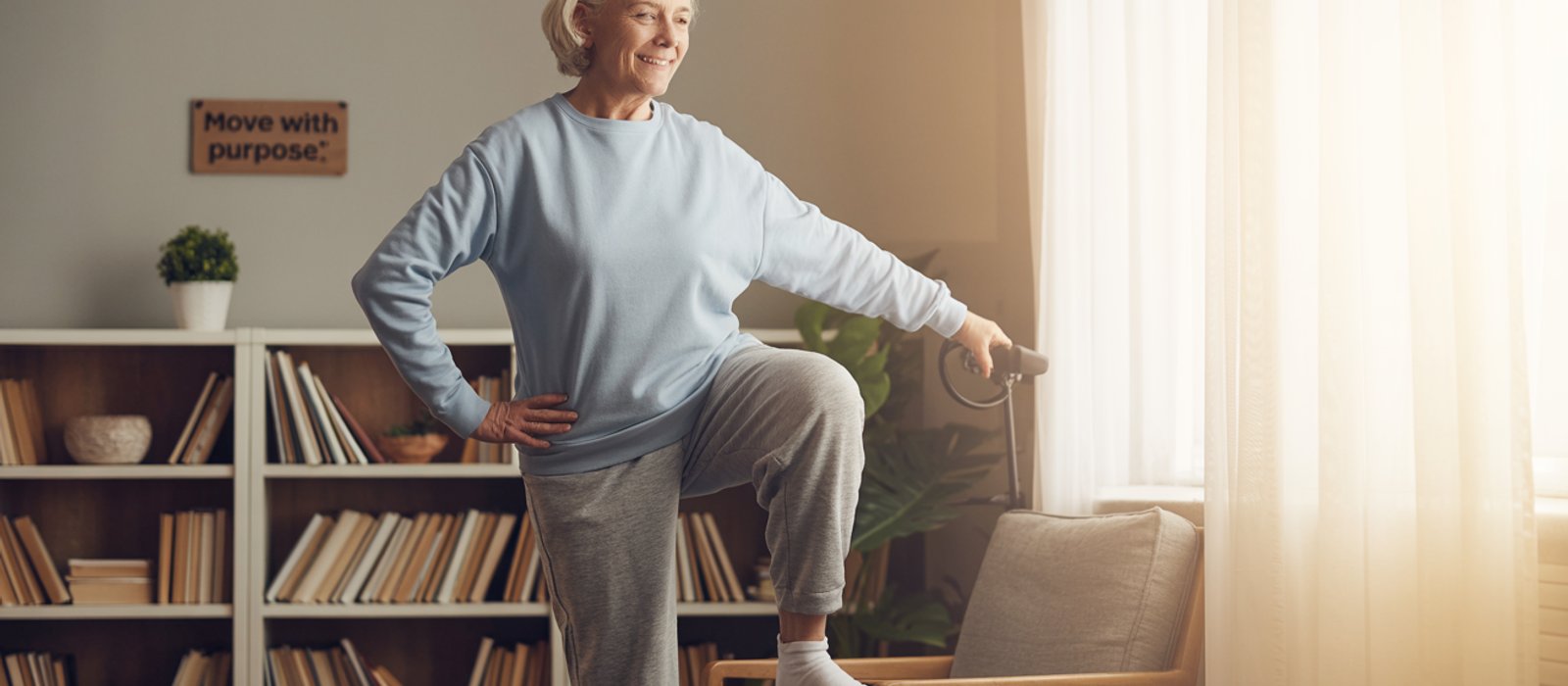
You don't need a gym membership or a personal trainer. What works best for independent living tips for elderly adults tends to be unglamorous but consistent: a daily walk, some gentle resistance work (even using tins of beans as weights), and balance exercises like standing on one foot while you brush your teeth.
Balance, in particular, deserves attention. Falls are the leading cause of injury-related hospital admissions for people over 65 in the UK. Improving your balance — even modestly — reduces that risk substantially. The NHS's own strength and balance programme, available free online, is a solid starting point.
Practical steps:
- Aim for 30 minutes of movement most days — it doesn't need to be continuous
- Add two or three balance exercises to your morning routine
- Talk to your GP about a falls risk assessment if you've had any near-misses
Sleep Is the Underrated Foundation of Everything
Ask most people what affects their memory, mood, and physical steadiness, and they'll mention diet or exercise before they mention sleep. But for staying independent as you age, sleep quality may be the single most undervalued factor.
Research from the University of California found that poor sleep in older adults is linked to faster cognitive decline, reduced reaction times, and — crucially — a higher risk of falls. The problem is that sleep patterns genuinely change with age. You may find yourself waking earlier, sleeping more lightly, or struggling to get back to sleep at 3am. This is common, but it isn't something you simply have to accept.
A few evidence-based adjustments make a real difference. Keeping a consistent wake time (even at weekends) helps regulate your body clock. Reducing screen time in the hour before bed, keeping your bedroom cool, and getting natural daylight in the morning all support deeper, more restorative sleep. Alcohol, despite feeling like a relaxant, fragments sleep in the second half of the night — worth knowing.
If sleep problems are persistent, it's worth raising with your GP. Cognitive Behavioural Therapy for Insomnia (CBT-I) has strong evidence behind it and is available on the NHS. It works considerably better than sleeping tablets for long-term results.
Practical steps:
- Set a consistent wake time and stick to it
- Get outside in natural light within an hour of waking
- If you're sleeping poorly, ask your GP about CBT-I before reaching for medication
Your Home Environment Does a Lot of the Heavy Lifting
Living alone over 70 safely isn't just about what you do — it's also about where you do it. The environment you live in either works with you or against you, often in ways that are easy to overlook because you've stopped noticing them.
Research from the Centre for Ageing Better highlights that home hazards — loose rugs, poor lighting, items stored too high or too low — contribute to a significant proportion of falls in older adults. Most of these are fixable with minimal cost or effort.
Good lighting is probably the highest-return change you can make. Ensuring hallways, staircases, and bathrooms are well lit (including at night with motion-activated options) removes one of the most common hazards. Removing rugs that slip or curl at the edges is another quick win. Grab rails in the bathroom aren't a concession to old age — they're sensible engineering.
Then there's the question of monitoring and assistive technology. This is where many people feel a flicker of resistance, which is completely understandable. Being monitored can feel like a step towards losing independence. But it's worth reframing: the right technology doesn't watch you, it watches out for you. A discreet fall detection device or a smart home monitor means you can get on with your life knowing that if something does go wrong, help will come quickly — without you needing to rely on scheduled check-in calls or worrying family members. That's not the end of independence. That's what independence actually looks like.
Practical steps:
- Walk through your home and note any lighting gaps, especially on stairs and in bathrooms
- Remove or secure any rugs that shift underfoot
- Consider a fall detection or home monitoring solution that gives you — and your family — quiet reassurance without intrusion
Connection Isn't Optional — It's Part of the Infrastructure
This one tends to get filed under "nice to have," which undersells it considerably. Social connection is, according to a growing body of research, one of the strongest predictors of healthy ageing and longevity — more so than many physical health factors.
A major study from Harvard found that people with strong social ties lived longer, had sharper memories into old age, and reported significantly higher quality of life. Loneliness, on the other hand, has been associated with cognitive decline, depression, and higher rates of hospitalisation.
For people living alone over 70, maintaining connection requires a bit more intentionality — it doesn't just happen the way it might when you're surrounded by colleagues or a busy household. That might mean a regular commitment: a weekly class, a walking group, a regular phone call with someone you actually enjoy talking to. It might mean volunteering, which research also links to better health outcomes in older adults.
The medium matters less than the consistency. What you're looking for is regular, meaningful contact — not just the occasional check-in.
Practical steps:
- Identify one regular social commitment you actually look forward to
- If getting out is difficult, look into telephone befriending services or online groups for your interests
- Don't wait for others to reach out — send the first message
The Takeaway
Staying independent as you age isn't about defying getting older — it's about making deliberate choices that keep you in the driving seat for longer. Movement, sleep, a safer home environment, and genuine human connection: these aren't complicated or expensive, but they add up to something significant.
The research doesn't paint a picture of inevitable decline. It paints a picture of people who made small, consistent adjustments and stayed well, sharp, and autonomous well into later life. You can be one of them.
And if the right bit of technology means your family worries less and you get more space to just live your life — that's not losing independence. That's protecting it.