
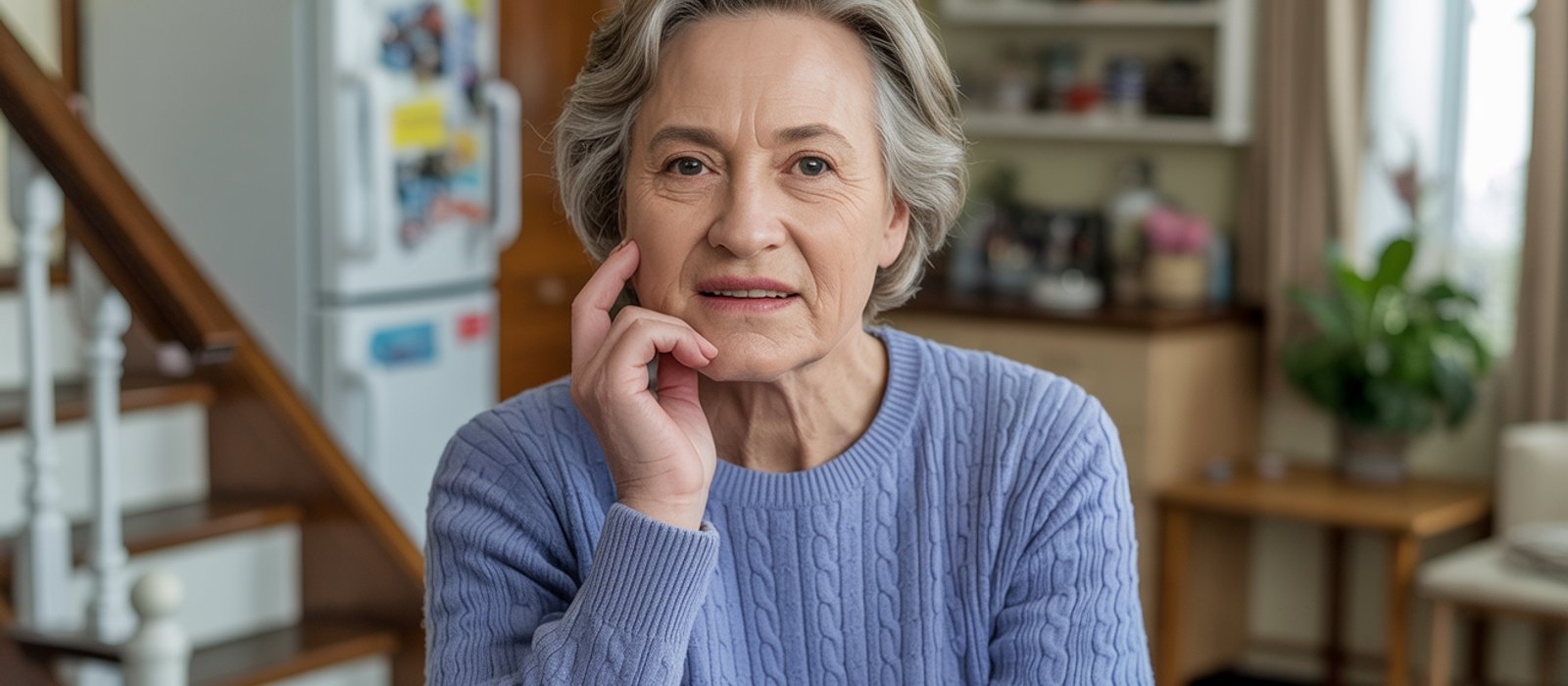
You've noticed the things piling up — the unopened post, the fridge that's a bit sparse, the slight hesitation on the stairs. You bring it up carefully, maybe even rehearse what you're going to say. And then your mum or dad looks at you and says, "I'm absolutely fine. I don't need any help."
And just like that, you're stuck.
You love them. You're worried. And you genuinely don't want to treat them like a problem to be solved. But the gap between what you're seeing and what they're willing to accept feels impossible to bridge.
You're not alone in this. It's one of the most common — and most emotionally exhausting — situations families face as parents get older. The good news is that it's not a dead end. It just requires a different kind of conversation.
Why Parents Push Back (and Why It Makes Perfect Sense)
Before thinking about how to talk to your elderly parent about safety, it helps to understand what's really going on when they say no.
Accepting help — especially at home — can feel like an admission. An admission that things are changing, that independence is slipping, that the roles between parent and child are quietly shifting. For someone who spent decades being the capable one, the one who sorted things out and looked after you, that's genuinely difficult to sit with.
It's not stubbornness for its own sake. It's self-protection.
There's also a fear of what comes next. Many older people worry that accepting a little help now means surrendering more later — that a monitoring device today leads to a care home tomorrow. That's not an irrational fear. It comes from watching friends and neighbours go through exactly that.
So when your parent refuses help at home, they're often not rejecting your concern. They're rejecting what the help represents to them.
Understanding this changes everything about how you approach the conversation.
How to Have the Conversation Without It Becoming a Battle
The instinct, when you're worried, is to make your case. To list the near-misses, cite the statistics, explain all the reasons why something needs to change. And while your concerns are completely valid, that approach tends to land as pressure — and pressure tends to produce resistance.
Here are some conversation starters that work better:
Lead with curiosity, not conclusions. Instead of "I'm worried you're not coping," try "How are you actually finding things day to day at the moment?" Give them room to be honest without feeling judged.
Name the fear underneath your own concern. "I think about what would happen if you had a fall and I didn't know" is more human than "You need to be monitored." It invites them into your experience rather than making them feel like they're being managed.
Ask what they worry about. Often parents have their own fears — about being a burden, about losing their home, about what declining health means. When those fears get heard, the conversation shifts from adversarial to collaborative.
Avoid ultimatums. "If you won't accept help, I can't stop worrying" might be true, but it puts your parent in an impossible position. They can't fix your worry, and framing it that way can make them feel guilty rather than understood.
Most importantly: don't expect one conversation to resolve everything. This is a process, not a single talk. Plant seeds, come back to it gently, and let them feel they have time to think.
Finding Solutions That Feel Like Freedom, Not Surveillance
One reason convincing an elderly parent to accept monitoring feels so hard is that the word "monitoring" itself conjures images of cameras, panic buttons, and someone watching over your shoulder. For a proud, independent person, that's never going to sound appealing.
But monitoring doesn't have to look like that.
Sensor-based home monitoring — the kind that tracks movement patterns, daily routines, and activity through small, discreet sensors rather than cameras or wearable devices — can feel very different. There's nothing to wear, nothing to press, no footage of anyone doing anything. It simply notices whether the day looks broadly normal: whether someone got up at their usual time, moved through the house as they typically do, whether the kettle got switched on.
When something looks unusual, a family member gets a quiet alert. That's it.
For many older people, this kind of system lands completely differently to traditional monitoring. It's not about being watched — it's about having a silent safety net that only becomes visible if something seems wrong. One way to frame it to your parent: "It's not about checking up on you. It's so I can stop worrying and you can get on with your life without me calling three times a day."
That's often a surprisingly persuasive argument. Many parents would genuinely rather have a sensor in the hallway than a well-meaning child ringing them constantly.
If your parent is resistant to the idea of monitoring specifically, it's worth asking: what would help you feel safe at home? Sometimes getting them to name what they'd find acceptable opens a door you didn't know was there.
When to Step Back (and When to Push Gently Forward)
There's a real tension here between respecting your parent's autonomy and making sure they're genuinely safe. There's no formula for getting that balance exactly right.
As a rough guide: if your parent is cognitively well and their choices, while worrying to you, aren't putting them in immediate danger, their right to make those choices matters. Autonomy and dignity aren't just nice ideas — they're central to wellbeing. Overriding someone's wishes, even with the best intentions, can erode trust and actually make things worse.
What you can do is stay connected, keep the conversation open, and make sure they know that help — on their terms — is available whenever they're ready for it.
If the risks are more serious, or if you're noticing signs of cognitive decline that affect their ability to make informed decisions, that's a different situation and may need input from their GP or a social care assessment.
But for most families, the path forward isn't about winning an argument. It's about building enough trust and understanding that your parent feels safe enough to say yes — not because they were talked into it, but because they actually want the peace of mind too.
The goal was never to take over. It was always just to make sure they're okay.